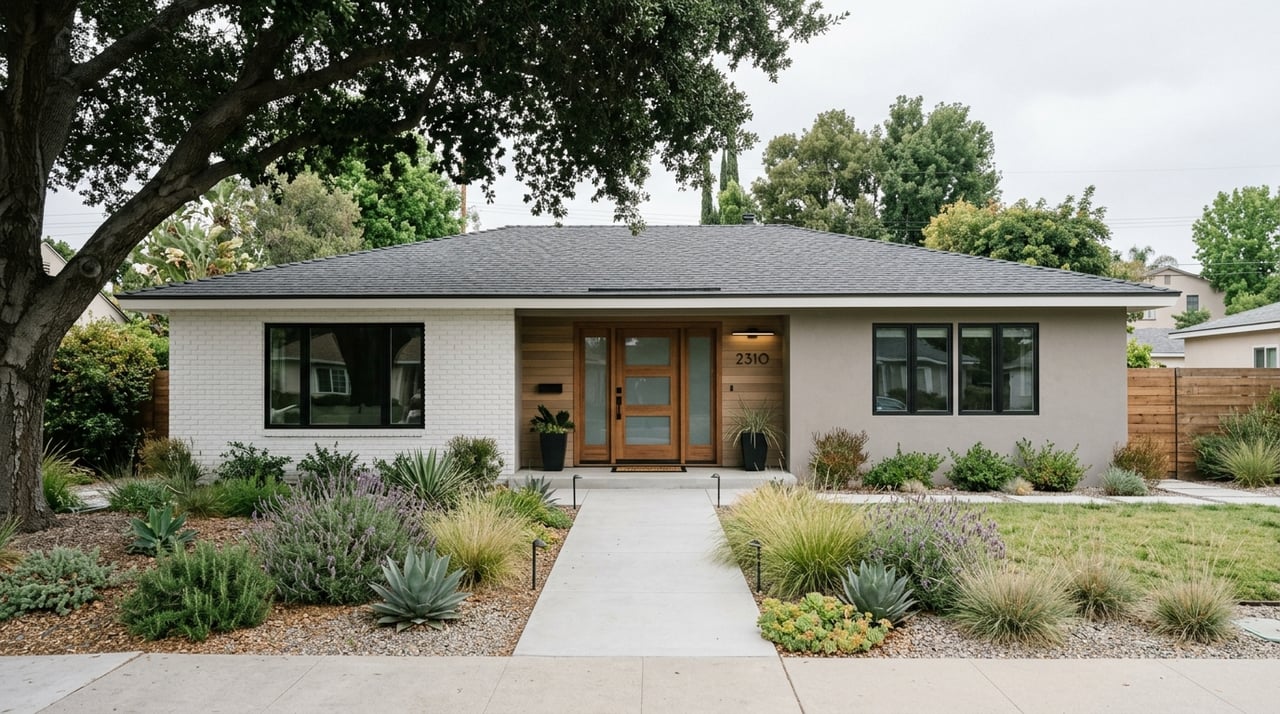
Wondering whether an older Sacramento home or a newer build is the better move for you? In this market, that choice is common because Sacramento has a large base of older homes and a smaller share of newer construction clustered in specific growth areas. If you are trying to balance price, location, condition, and future updates, this guide will help you sort through the tradeoffs with confidence. Let’s dive in.
Sacramento Is Mostly An Older-Home Market
If you feel like you keep seeing homes from the 1950s, 1960s, 1970s, and 1980s, that is not your imagination. Sacramento is an older housing market by default, with about 72% of homes built before 1990 and 55% built before 1980, according to the City’s Housing Element. The city’s median year built is 1975, and a 2022 ACS appendix shows 58% of owner-occupied units were built before 1980.
That matters because your search is often not just about style. It is about comparing a large pool of older homes in established parts of Sacramento with a more limited number of newer homes in growth corridors. In other words, the age of the home often connects directly to where it is located and what kind of upkeep or upgrades you may face.
Where Newer Homes Are Usually Found
In Sacramento, newer homes are not spread evenly across the city. The City notes that Natomas has grown rapidly since the mid-1990s and still has more than 1,000 acres of undeveloped land, while Delta Shores is an 800-acre master-planned development. That means if you want newer construction, your options are more likely to cluster in areas like these than in the city’s older core.
This can shape your search quickly. If you want a newer floor plan, current building standards, and fewer immediate update questions, you may need to focus on growth areas. If you want an established location with a larger selection of homes, older neighborhoods will likely offer more choices.
Why Age Alone Does Not Decide Value
A common mistake is assuming older always means cheaper and newer always means more expensive. In Sacramento, the numbers show it is not that simple. Realtor.com’s April 2026 data shows a citywide median listing price of $495,000, but neighborhood medians vary widely, from $437,000 in Southeastern Sacramento to $719,500 in Central Sacramento. North Sacramento sits at $480,000, and ZIP code 95835 in North Natomas is $552,500.
The takeaway is clear: location can outweigh age. Some older central neighborhoods can command prices above the city median, while some newer-growth areas may be closer to the middle of the market. When you compare homes in Sacramento, it is smarter to look at the full package of location, condition, lot, layout, and future costs rather than the year built alone.
What Older Sacramento Homes Can Offer
Older homes often give you access to established parts of Sacramento where much of the city’s housing stock already exists. You may find mature streetscapes, a wider variety of architecture, and locations that are harder to replicate in newer development areas. For many buyers, that established setting is a major part of the appeal.
Older homes can also create opportunities if you are comfortable with updates. If you have a clear budget and a realistic plan, an older property may let you personalize finishes and systems over time. This can be especially appealing if you value character or want to improve a home strategically.
What Older Homes Usually Require
The tradeoff is due diligence. Because so much of Sacramento’s housing stock predates 1980, many buyers need to look closely at condition, permit history, and future upgrade needs before making a decision. An older home can be a great fit, but it usually asks more questions upfront.
One major issue is lead-based paint. For most homes built before 1978, federal law requires lead-based paint disclosure before sale or lease, and buyers have a 10-day period to inspect or assess lead risk. In Sacramento, where so many homes were built before that cutoff, this is a practical part of the buying process rather than a rare exception.
Another important area is permit history. Sacramento requires permits for many common projects, including electrical, mechanical, and plumbing work, as well as window replacements, water services, sewer services, water heaters, and reroofing. The City also says permit cards from the early 1900s through 1982 can be viewed in its building-records system, which can help you verify past work on an older property.
Electrical And Retrofit Questions
If you plan to modernize an older home, the electrical system deserves extra attention. Sacramento’s existing-building electrification FAQ notes that some homes may need panel upgrades, sub-panels, or other retrofits to support all-electric appliances. In some cases, efficient appliances and circuit-sharing devices may help avoid a full upgrade, but it depends on the home.
That does not mean older homes are a poor choice. It simply means you should evaluate future plans early. If you know you want to remodel a kitchen, replace major systems, or move toward all-electric living, it helps to understand those costs before you commit.
What Newer Sacramento Homes Can Offer
Newer homes start with a different baseline. As of January 1, 2026, Sacramento requires all new plan review and permit applications to comply with the 2025 California Building Standards Codes. The California Energy Commission also says the 2025 Building Energy Efficiency Standards took effect on January 1, 2026.
For you as a buyer, that usually means fewer immediate code-related retrofit questions. A newer home may offer more confidence around current construction standards, energy performance, and system compatibility from day one. That can be especially attractive if you want a more move-in-ready experience and fewer unknowns in the first few years.
Builder Incentives Can Change The Math
There is another local angle worth watching. Sacramento’s current budget commentary says resale home values declined 1% between November 2024 and November 2025, while new home values maintained their sales pace through builder-provided incentives. That suggests new construction may come with concessions that help offset pricing, especially when the broader resale market softens.
This is why comparing sticker price alone is not enough. A newer home may include incentives that affect your monthly costs or overall purchase terms. When you compare options, make sure you are looking at the real numbers, not just the list price.
How To Compare Older And Newer Homes
The best choice usually comes down to your priorities. In Sacramento, the older-versus-newer decision is often a tradeoff between established-location access and lower retrofit risk. Neither option is automatically better. The right fit depends on how you want to live, what you can comfortably maintain, and how much flexibility you have for updates.
Here are a few smart questions to ask as you compare homes:
- Is the home pre-1978, and if so, what lead disclosure and inspection steps apply?
- Were past remodels or upgrades properly permitted?
- Will the electrical system support your future plans?
- Are you choosing between an established area and a growth corridor?
- Are builder incentives affecting the value of a newer home?
A Simple Way To Think About The Tradeoff
If you are drawn to older Sacramento homes, you may be prioritizing location, character, and access to the city’s established housing stock. If you are leaning toward newer construction, you may be prioritizing current-code construction, fewer immediate upgrade questions, and possible builder incentives. Both paths can make sense.
The key is to make the decision with a full understanding of the home itself, not just the age on paper. That is where local guidance matters. When you know how to evaluate permit history, renovation risk, pricing by area, and the true cost of updates, you can choose with much more confidence.
Whether you are looking for an established Sacramento home with long-term upside or a newer build with fewer near-term projects, working with someone who understands pricing, financing, and renovation tradeoffs can save you time and stress. If you want help comparing your options in Sacramento, Melissa Lamberti can help you evaluate the numbers, the condition, and the best fit for your goals.
FAQs
What makes older homes common in Sacramento?
- Sacramento has an older housing stock overall, with about 72% of homes built before 1990 and 55% built before 1980, so many buyers naturally end up comparing older homes with a smaller pool of newer construction.
Where are newer homes usually located in Sacramento?
- Newer homes are more likely to be found in growth corridors such as Natomas and Delta Shores, rather than evenly distributed across Sacramento’s older central neighborhoods.
Do older Sacramento homes always cost less than newer homes?
- No. Local price data show that location and neighborhood demand often matter as much as, or more than, the age of the home.
What should buyers check before buying an older Sacramento home?
- Buyers should review whether the home is pre-1978, look into lead disclosure requirements, verify permit history for past work, and consider whether the electrical system can support future upgrades.
Why might a newer Sacramento home still be worth comparing closely?
- Newer homes may offer current-code construction and fewer immediate retrofit concerns, but builder incentives, purchase price, and location still need to be compared carefully to see which option fits your goals best.